What we know
What is autism?
Autism is a lifelong neurological difference that affects how people process sensory information, communicate and interact with others.
What causes autism?
Autism is a neurological difference. Scientists are pointing towards differences in connectivity in the autistic brain compared to a neurotypical one. It simply means an autistic individual will process information differently. It is important to understand that autism is not an illness. It cannot be caught. An autistic person is born autistic. There is currently no identified main cause, and it is believed by many that both genetics and environment play a role.
Can you be a bit autistic?
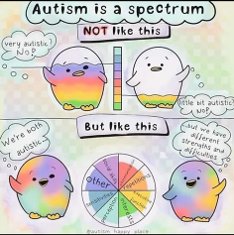
Autism is described as a spectrum condition because every autistic person experiences autism uniquely and has their own strengths and challenges. Please do not misunderstand this as it being possible to be “a little bit autistic”. What it means is that the areas in which one autistic person finds challenges, may pose fewer difficulties for their autistic peer and vice versa.
What are the signs of autism?
It is important to note that autistic individuals have many strengths which can be particularly helpful, such as the ability to focus on small details, excellent memory skills, logical and independent thinking- great for problem solving, and good organisational skills.
Is Autism a disability?
Autism is classed as a disability and as such is a protected characteristic. Not all autistic individuals will consider themselves disabled although they may have additional learning or sensory difficulties. Many autistic individuals feel their difficulties are created by society who are intolerant of, and create an environment which is not supportive to, their needs.
Damian Milton explained some of these difficulties in his double empathy theory. Learn more about the double empathy theory here.
Some autistic individuals will only need a few simple accommodations made in school or the workplace to enable them to thrive. Others may need a greater degree of support.
Person-centred language
At Auti-Ms we do not like the terminology often used around autism such as disorder or condition. Likewise, we do not say “you have autism” but rather “you are autistic”. Our charity users request and support this person-centred terminology.

